
Turnover Flange Septa, for Socket Manufacturer,Supplier and Exporter in India
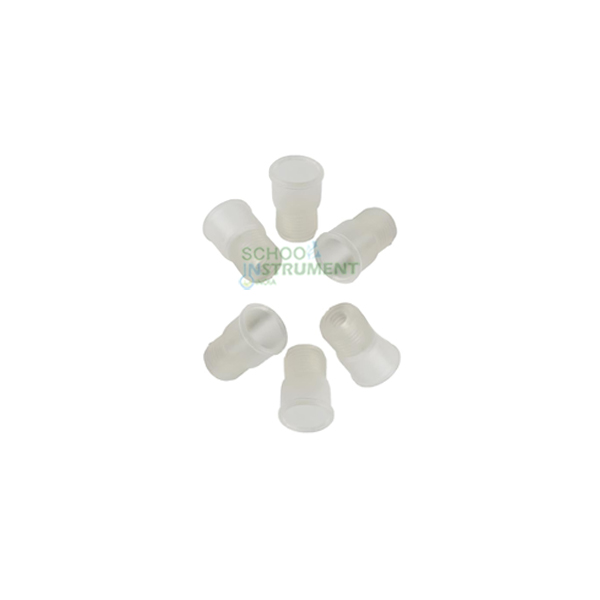
Product Code : SCL-ELE-11926
Turnover Flange Septa
are engineered for high-integrity, resealable closure of socket-jointed
laboratory glassware. Optimized for University and Vocational chemistry
research, these septa facilitate secure needle penetration for reagent addition
while maintaining atmospheric isolation. Available in Natural and Silicon
Rubber, they comply with ASTM laboratory standards for Secondary and Tertiary
educational curricula.
Technical Specifications
|
Tender Specification |
OEM Technical Detail |
|
Material Grade |
High-Elasticity Natural
Rubber / Platinum-Cured Silicon Rubber |
|
Mechanical Design |
Turnover Flange for external
socket-wall grip |
|
Application Interface |
Precision-fit for standard
laboratory glassware sockets |
|
Functional Utility |
Resealable puncture-site for
needle-entry fluid transfer |
Key Pedagogical Outcomes
·
High-Memory
Elastomeric Matrix: Enables multiple
needle penetrations without compromising seal integrity, supporting in
"Anaerobic Reaction Management" and "Quantitative
Synthesis."
·
Dual
Material Availability (Natural/Silicon): Facilitates student selection based on thermal and chemical
compatibility, reinforcing "Advanced Chemical Safety" and
"Material Science" curricula.
·
External
Flange Anchorage: Prevents internal
pressure displacement of the septa, supporting "Pressure-Sensitive
Experimental Protocols" in Vocational TVET modules.
International Logistics & Compliance
To ensure material
longevity and prevent oxidative perishing or surface tackiness during
transcontinental maritime transit, all septa are vacuum-sealed in UV-shielded
primary packaging and housed in export-grade seaworthy crating (ISPM-15
compliant). International procurement documentation includes the Manufacturer’s
Authorization Form (MAF), Certificate of Conformance (CoC), and IQ/OQ/PQ
certification for institutional quality audits. The components are fully
tropicalized; the elastomer substrates are batch-tested for operational
stability in environments reaching 45°C and 90% Humidity to ensure zero
hardening or mechanical failure in extreme climates.


 Charts-III.jpg)
