
Earth Science Manufacturer, Suppliers and Exporter in India
School Instrument India is leading Earth Science Manufacturer,and supplier and Exporter in India, Algeria (Algiers), Angola (Luanda), Argentina (Buenos Aires), Armenia (Yerevan), Australia(Canberra), Austria (Vienna), Bahrain (Manama), Bangladesh (Dhaka), Bhutan (Thimphu), Bolivia (Sucre), Botswana (Gaborone), Brazil (Brasília), Brunei (Bandar Seri Begawan), Montenegro (Podgorica), Morocco (Rabat), Mozambique (Maputo), Myanmar (Naypyidaw), Namibia (Windhoek), Nepal (Kathmandu), New Zealand (Wellington), Nigeria (Abuja), Oman (Muscat), Palestine (Ramallah), Panama (Panama City), Papua New Guinea (Port Moresby), Paraguay (Asunción), Peru (Lima), Philippines (Manila)¸ Portugal (Lisbon), Qatar (Doha), Rwanda (Kigali), Saudi Arabia (Riyadh), Senegal (Dakar), Serbia (Belgrade), Sierra Leone (Freetown), Slovakia (Bratislava), South Africa (Cape Town) (Pretoria) (Bloemfontein), South Sudan (Juba), Spain (Madrid), Sri Lanka (Sri Jayawardenepura Kotte) (Colombo), Sudan (Khartoum), Syria (Damascus), Tanzania (Dodoma), Thailand (Bangkok), Togo (Lomé), Tonga (Nuku'alofa), Trinidad and Tobago (Port of Spain), Tunisia (Tunis), Turkey (Ankara), Turkmenistan (Ashgabat), Uganda (Kampala), United Arab Emirates (Abu Dhabi), United Kingdom (London), United States (Washington, D.C.)
Written by Palak Mall, Senior Content Writer · reviewed by Arvind Kumar, Lab Equipment Specialist (12+ years) · last reviewed 14 October 2026.
Earth Science on School Instrument India lists 37 items directly, plus a further 38 specimen collections in the Rocks Specimens sub-range — 75 in total for geography, geology and environmental science teaching. The range divides into four different kinds of teaching aid: reference pieces such as globes and maps, solid models of landforms and tectonic processes, real rock and mineral specimen collections, and field instruments for taking measurements outdoors. Dimensions and materials below are the figures printed on the linked product pages.
What the range contains
| Kind of aid | Items | Examples |
|---|---|---|
| Specimen collections | 38, in Rocks Specimens | Rock, mineral, ore, gem, crystal and stone sets from 6 to 50 pieces, property-based collections of 10, and loose specimens sold by the piece. |
| Solid models | 16 | 3D relief models, plate tectonics, sectioned volcano, alpine glacier, land form evolution, fault and folding, contour relief, terrain, map reading. |
| Reference pieces | 12 | Geographical reference globes, illuminated globes, globes with ocean relief, physical shading globes, antiquity globes, a 5.5 inch moon globe, wall and print maps, dual maps. |
| Field instruments | 9 | Large magnetic compass, mapping compass, liquid-filled compass, clinometer, brass sextant, weather station, humidity and temperature probe, soil sifter. |
The Identification Sequence
The Rocks Specimens sub-range contains something easy to miss when scanning a product list: eight separate collections of ten specimens each, every one built around a single physical property. Taken together they follow the order a geologist actually works through when identifying an unknown mineral, which makes them a teaching sequence rather than eight unrelated boxes. A department buying them piecemeal usually ends up with gaps in the middle of that sequence.
| Step | Property tested | Collection |
|---|---|---|
| 1 | Hardness — resistance to scratching | Mohs Hardness Set, nine specimens. The Mohs scale itself runs from 1 to 10. |
| 2 | Lustre — how the surface reflects light | Luster Collection, set of 10 |
| 3 | Streak — the colour of the powdered mineral | Streak Collection, set of 10 |
| 4 | Cleavage — how it splits along planes | Cleavage Collection, set of 10 |
| 5 | Fracture — how it breaks where it does not cleave | Fracture Collection, set of 10 |
| 6 | Tenacity — brittle, malleable, sectile or elastic | Tenacity Collection, set of 10 |
| 7 | Specific gravity — density against water | Specific Gravity Collection, set of 10 |
| 8 | Feel, odour and taste | Feel Property Collection and Odor/Taste Collection, sets of 10 |
The eight property sets teach how to identify; the comprehensive sets give material to identify. Rock-forming minerals comes as ten, mineral sets as twenty, thirty, and the rocks and minerals set as fifty. Loose specimens are listed separately for replacing pieces that go missing from a set, which they will.
Specimen collections by theme
Beyond the property sequence, the sub-range groups specimens two further ways: by material type and by where the material is used. The second group is what makes a mineralogy lesson land with students who are not going to become geologists.
- By material — metallic ores, 20, gems, 20, crystals, 15, stones, 20; alloys, 20; metals, 12; woods, 12; glass, 9; plastics, 6; plus collections of fibres and of soils and clays.
- By where it is used — minerals used in the cement industry, the paper industry, the paints industry (15), in building a house, around the home, in the kitchen (6), and a 50-piece set covering minerals used across different industries.
- Loose and bulk — loose mineral specimens, loose ore specimens, a general rock set, and a combined metals and alloys set, for topping up or for class handling where breakage is expected.
Relief and process models
| Model | What it shows | Detail as listed |
|---|---|---|
| 3D Relief Models, Series II | Folds and faults, wind-formed landscapes, water cycles | Vacuum-formed rigid PVC on a markable and washable surface, 100 x 75 cm large format, hard-backing aluminium frame with integrated suspension hooks, multi-colour high-relief mapping. |
| Contour Gradient Relief Model | Turning 2D contour intervals into a 3D landform | Ruggedised high-impact polymer with a multi-layer laminate, built as layered 3D relief with dismountable contour strata. Features represented: crest, ridge, valley, saddle, precipice, stream and alluvial apron, with flat and abrupt slope profiles for comparison. |
| Plate Tectonics Model | Convergent, divergent and transform boundaries | A multi-part relief model for showing mountain building and sea-floor processes at each boundary type. |
| Sectioned Volcano Model | Internal structure of a volcano | Cut away to show magma conduits and subsurface chambers alongside the surface form. |
| Alpine Glacier Model | A glaciated valley before and after the ice | A two-part model, one showing the glacier in place and one the landscape it leaves, for comparing glacial erosion with terminal moraine deposits. |
| Land Form Evolution Model | Folding followed by erosion | Shows crustal deformation and the shapes that weathering and denudation then produce. |
The dismountable contour model and the glacier pair are the two that do something a diagram cannot: students take the contour strata apart to see what an interval means, and set the two glacier halves side by side. For wall display rather than handling, the 100 x 75 cm relief models come framed with hooks.
Field instruments
- Compasses — a large magnetic compass for demonstration, a mapping compass for use on a sheet, and a liquid-filled magnetic compass for steadier field readings. Plotting and pocket compasses are also listed under Electricity & Magnetism with the magnetism apparatus.
- Clinometer — for measuring vertical heights and slope angles, listed as reading up to 70° above or below the horizon.
- Brass Sextant — for celestial altitude measurement and finding latitude from a meridian altitude observation.
- Weather Station — UV-stabilised impact-resistant ABS and polycarbonate, with a dual-scale analogue thermometer reading °C and °F, a low-friction 360° rotating vane with speed indicator, a graduated removable rain gauge marked in millimetres and inches, a screen-printed wind chill matrix and an integrated post-mount bracket.
- Soil Sifter — for separating soil fractions in the field, used alongside the soils and clays collection indoors.
Globes and maps
Twelve reference pieces are listed. The geographical reference globe is the general-purpose choice for topography and coordinates. The illuminated globe works as two globes in one, showing different information lit and unlit, which suits a room where one globe has to cover both physical and political geography. A physical shading globe, a globe with ocean relief and antiquity globes are also listed, along with a 5.5 inch moon globe. For wall work the range covers plastic wall maps, print maps, dual maps and a 3D world map, and the map reading model bridges between a flat sheet and the ground it represents.
Working out an Earth Science order
Order the specimen collections by how they will be used rather than by piece count: the eight property sets for teaching identification, one comprehensive set per group for practice, and loose specimens as consumable replacement stock. Models split between handling pieces and wall display, and the framed 100 x 75 cm relief models need wall space allocating before they arrive. According to the ordering pages, institutional purchase orders, bank transfers and government e-tender payments are accepted from schools, colleges, universities and training institutions in India. Supply is also stated to institutions in Asia, Africa and the Middle East. Tendered geography and geology requirements go through the Tenders page.
Two things are worth asking about explicitly when the enquiry goes in. First, specimen sizes are not stated on most collection pages, and they matter for class handling, so ask for the specimen size range in the quotation. Second, several collections share a name but differ in count — mineral sets are listed at 20, 30 and in earthy and general variants — so quote the product code rather than the name alone.
Related supply groups
- Rocks Specimens — the 38 specimen collections described above.
- Light & Optics — loupes and hand magnifiers for specimen work, and the polarimeter for optical mineralogy.
- Heat & Thermodynamics — thermometers and apparatus that pair with weather and climate modules.
- Educational Lab Equipment — general school and college laboratory supply.
- Mechanics and Fluid Mechanics — weights and balances, including those used for specific gravity work.
- Contact — for item lists, quantities and quotation requests.
Questions buyers ask
How many items are in the Earth Science range?
37 listed directly under Earth Science, plus 38 specimen collections in the Rocks Specimens sub-range, so 75 in total. The direct items are models, globes, maps and field instruments; the sub-range is rock, mineral and material collections.
Which specimen sets should a school buy first?
The eight property collections of ten — hardness, lustre, streak, cleavage, fracture, tenacity, specific gravity, and feel and odour — because they teach the identification method. Add one comprehensive set for practice: rock-forming minerals at ten, or thirty or fifty specimens for a larger department.
How many specimens are in the Mohs hardness set?
Nine. The Mohs Hardness Set is listed as a nine-specimen collection for comparing scratch resistance, while the Mohs scale itself runs from 1 to 10.
What is the difference between the relief models and the contour model?
The 3D relief models are framed wall pieces, 100 x 75 cm in vacuum-formed rigid PVC with a markable and washable surface, for display and annotation. The contour gradient model is a handling piece built in dismountable layers, so students can take the elevation intervals apart and see what a contour line means.
What angle range does the clinometer cover?
The clinometer is listed as giving readings up to 70° above or below the horizon, for measuring slope gradients and working out vertical heights by angular measurement.
Can replacement specimens be ordered for a set?
Yes. Loose mineral specimens and loose ore specimens are listed separately from the sets, which is the route for replacing pieces lost or broken out of a collection. Quote the collection the piece belongs to in the enquiry through the contact page.
Request a quotation
Send the item names, product codes and quantities through the contact page, and a quotation covering packing and despatch will be returned against that list. For specimen collections, asking for the specimen size range at the same time saves a second exchange. Current ISO certificate copies can be requested from School Instrument India.

Large Magnetic Compass
Product Code : SCL-ES-11323
The Large Magnetic Compass is a ruggedized 90mm diameter instrument engineered for the quantitative analysis of geomagnetic field orientation and directional navigation.
View Details
Magnetic Compasses
Product Code : SCL-ES-11324
This range of Magnetic Lab Compasses is engineered for high-precision plotting, field mapping, and the empirical analysis of electromagnetic flux.
View Details
Sextant, Brass
Product Code : SCL-ES-11325
The Nautical Brass Sextant is a precision instrument engineered for celestial altitude measurements and the empirical determination of geographic coordinates.
View Details
Compass, Liquid-Filled Magnetic
Product Code : SCL-ES-11326
The Liquid-Filled Magnetic Compass is a ruggedized navigational instrument engineered for stabilized azimuth determination and field-based topographic mapping.
View Details
Tectonics Model Set - Learning About Faults, Folds and Plate Movements
Product Code : SCL-ES-11327
The Tectonics Model Ensemble is a high-fidelity analytical system engineered for the 3D demonstration of lithospheric boundary interactions and crustal deformation.
View Details
Mapping Compass
Product Code : SCL-ES-11328
The Mapping and Orienteering Compass is a ruggedized navigational instrument engineered for precise bearing determination and topographic map overlays.
View Details
Mini Weather Station
Product Code : SCL-ES-11329
The Integrated Meteorological Observation Unit is engineered for the empirical measurement of micro-climate variables, including thermal gradients, anemometry, and precipitation.
View Details
Solar Eclipse Glasses
Product Code : SCL-ES-11330
Solar Eclipse Filtration Eyewear is engineered for the direct, high-optical-density observation of solar phenomena.
View Details
Clinometer
Product Code : SCL-ES-11331
This precision Clinometer is engineered for the empirical determination of vertical heights and inclination gradients through angular measurement.
View Details
Soil Sifter
Product Code : SCL-ES-11332
The Sieve Analysis Station is a ruggedized field instrument engineered for the gravimetric separation of soil particles and sediment classification.
View Details
Moon Globe 5.5"
Product Code : SCL-ES-11333
The Topographic Lunar Globe is a high-resolution 5.5" diameter instructional instrument engineered for the spatial analysis of lunar geomorphology and Apollo landing site trajectories.
View Details
Humidity and Temperature Probe
Product Code : SCL-ES-11334
The Digital Thermohygrometric Probe is a high-precision, small-form-factor instrument engineered for real-time monitoring of ambient thermal gradients and relative humidity.
View Details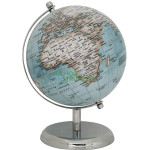
Antiquity Globes
Product Code : SCL-ES-11969
The Antiquity Cartographic Globe is a high-resolution terrestrial reference instrument designed for the empirical study of historical cartography and geopolitical boundaries.
View Details
Dual Maps
Product Code : SCL-ES-11970
The Dual-Perspective Cartographic Series provides high-fidelity, synchronous analysis of political boundaries and physical geomorphology.
View Details
Geographical Globes, Superior
Product Code : SCL-ES-11971
The Geographical Reference Globe is a high-precision terrestrial instrument engineered for the empirical study of global topography, coordinate systems.
View Details
German Print Maps
Product Code : SCL-ES-11972
The Westermann Cartographic Series is a high-resolution, German-print pedagogical reference system engineered for the precise study of regional and global geomorphology.
View Details
Globe with Ocean
Product Code : SCL-ES-11973
The Illuminated 2-in-1 Terrestrial Globe is a dual-state cartographic instrument calibrated for the empirical study of physical oceanography and geopolitical boundaries.
View Details
Globes, Illuminated
Product Code : SCL-ES-11974
The Geographical Illuminated 2-in-1 Globe is a dual-state terrestrial reference instrument designed for the empirical study of physical geomorphology and geopolitical boundaries.
View Details
Philip School Map
Product Code : SCL-ES-11975
The High-Resolution Cartographic Series is a large-format instructional reference system engineered for the empirical study.
View Details
Physical Shading Globe
Product Code : SCL-ES-11976
The Physical Shading Terrestrial Globe is a high-resolution cartographic reference instrument engineered for the simultaneous analysis of geopolitical boundaries and topographical relief.
View Details
Plastic Wall Maps
Product Code : SCL-ES-11977
The Environmental and Geopolitical Wall Map Series provides high-fidelity spatial data for the analysis of global ecosystems and administrative infrastructures.
View Details
3D Relief Models- I
Product Code : SCL-ES-11978
The 3D Geomorphological Relief Series is a collection of high-resolution, rigid PVC topographic models engineered for the empirical analysis of lithological cycles and tectonic dynamics.
View Details
3D Relief Models- II
Product Code : SCL-ES-11979
The 3D Geomorphological Relief Series II is a collection of high-resolution, rigid PVC diagnostic models engineered for the empirical.
View Details
Alpine Glacier Model
Product Code : SCL-ES-11980
The Alpine Glacier Comparative Relief Model is a dual-part diagnostic instrument engineered for the empirical study of cryospheric dynamics and post-glacial geomorphology.
View Details
Contour Map
Product Code : SCL-ES-11981
The Contour Gradient Relief Model is a precision-engineered 3D analytical tool designed for the empirical study of topographical mapping and geomorphology.
View Details
Fault Folding Demo
Product Code : SCL-ES-11982
The Fault and Folding Tectonic Demonstrator is a high-precision kinematic model engineered for the empirical analysis of lithospheric deformation and orogenic processes.
View Details.jpg)
Fold Model (Demo Model)
Product Code : SCL-ES-11983
The Crustal Fold Demonstration Model is a precision-calibrated mechanical instrument designed for the empirical study of lithospheric deformation and orogenic processes.
View Details
Geographer Sketches, 3D
Product Code : SCL-ES-11984
The 3D Geographer Bio-Sketch Series is a specialized pedagogical reference system engineered for the empirical study of cartographic history and geographical theory.
View Details
Land Form Evolution
Product Code : SCL-ES-11985
The Land Form Evolution Model is a precision-engineered diagnostic instrument designed for the empirical study of tectonic folding and subsequent denudation processes.
View Details
Map Reading Model
Product Code : SCL-ES-11988
The Map Reading and Topographic Interpretation Model is a specialized diagnostic instrument engineered for the empirical study of planimetric data translation.
View Details
Map of The World, 3D
Product Code : SCL-ES-11987
The World Map 3D Raised Relief is a high-precision cartographic instrument engineered for the empirical study of global geomorphology and ocean floor bathymetry.
View Details
Model Island Formation
Product Code : SCL-ES-11989
The Map Reading and Topographic Interpretation Model is a specialized diagnostic instrument engineered for the empirical study of planimetric data translation.
View Details
Model of Volcano
Product Code : SCL-ES-11990
The Sectioned Volcano Internal Structure Model is a high-fidelity diagnostic instrument engineered for the empirical analysis of magmatic conduits and eruptive geomorphology.
View Details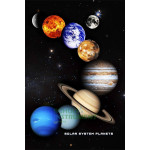
Planet Model
Product Code : SCL-ES-11991
The Solar System Planar Scale Model is a high-fidelity 3D instructional plaque engineered for the empirical study of celestial mechanics and planetary proportions.
View Details
Plate Tectonics
Product Code : SCL-ES-11992
The Plate Tectonics Kinematic Relief Model is a multi-dimensional diagnostic instrument engineered for the empirical analysis of convergent, divergent, and transform boundary interactions.
View Details
Weather Model
Product Code : SCL-ES-11994
The Cyclonic Storm and Frontal Systems Model is a diagnostic 3D atmospheric simulator engineered for the empirical analysis of air mass boundaries.
View Details
Terrain Model
Product Code : SCL-ES-11995
The Comparative Terrain Geomorphology Model Set is a dual-component diagnostic instrument engineered for the empirical study of orogenic evolution and denudation.
View Details