Rubber Pad Manufacturer,Supplier and Exporter in India
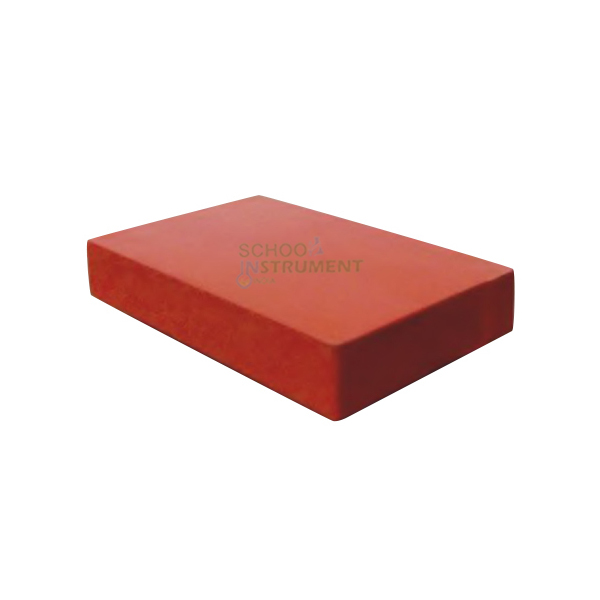
Product Code : SCL-ELE-11920
The Laboratory Rubber
Pad is engineered for precision vibration isolation and structural dampening of
benchtop apparatus in University and Vocational technical environments.
Compliant with ASTM D2240 standards for elastomeric shore hardness, this 72mm x
50mm x 13mm component stabilizes sensitive optics and weighing instruments
against mechanical resonance. Optimized for high-durability requirements in
Secondary and Tertiary science curricula.
Technical Specifications
|
Tender Specification |
OEM Technical Detail |
|
Material Grade |
Vulcanized Industrial-Grade
Natural Rubber / SBR Blend |
|
Dimensions |
72mm x 50mm x 13mm |
|
Mechanical Profile |
High-density solid core for
optimized load distribution |
|
Deformation Resistance |
Calibrated for sustained
equipment loads without permanent set |
Key Pedagogical Outcomes
·
High-Damping
Elastomeric Matrix: Mitigates the
transfer of structural vibrations to analytical balances, ensuring student
success in "Quantitative Gravimetric Analysis" modules.
·
Calibrated
13mm Thickness Profile:
Provides significant mechanical clearance and shock absorption for
reciprocating machinery simulations, supporting "Applied Mechanics and
Vibration" curricula.
·
High-Friction
Surface Interface: Prevents lateral
displacement of heavy instrumentation during high-torque operations, reinforcing
"Workstation Safety and Asset Protection" protocols.
International Logistics & Compliance
To ensure material
longevity and prevent surface oxidation during transcontinental maritime
transit, all units are vacuum-sealed in UV-stabilized moisture-barrier
packaging and housed in export-grade seaworthy crating (ISPM-15 compliant).
International procurement documentation includes the Manufacturer’s
Authorization Form (MAF), Batch-specific Certificate of Analysis (CoA), and
IQ/OQ/PQ certification for institutional quality audits. The compound is fully
tropicalized; the rubber substrate is batch-tested for operational stability in
environments reaching 45°C and 90% Humidity to prevent polymer leaching or
mechanical fatigue in tropical climates.