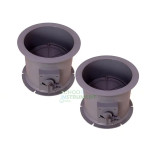
PP Trays for Lab Furniture Manufacturer,Supplier and Exporter in India

Product Code : SCL-WAS-11835
High-density, 100%
molded Polypropylene (PP) trays engineered for secondary, vocational, and
university-level laboratory furniture. These trays provide a chemically inert
secondary containment solution for reagent racks, fume hoods, and storage
units. Compliant with international chemical safety standards, they prevent
surface degradation and facilitate the safe management of aggressive reagent
spills in high-traffic technical environments.
Technical Specifications
|
Tender Specification |
OEM Technical Detail |
|
Material Grade |
100% Virgin Injection-Molded
Polypropylene (PP) |
|
Chemical Resistance |
Inert to most Acids, Alkalis,
and Organic Solvents |
|
Application Environment |
Fume Hoods, Reagent Racks,
and Hazardous Chemical Storage |
|
Dimensions |
Multi-variant availability
(Standard Institutional Formats) |
Key Pedagogical Outcomes
·
Chemically Inert PP Substrate: Allows students to handle hazardous reagents
with an added layer of secondary containment, reinforcing Laboratory Safety
Protocol.
·
Seamless Injection-Molded Construction: Facilitates rapid decontamination and spill
recovery exercises, supporting "Application" level in Vocational
Safety training.
·
Modular Sizing for Fume Hoods: Optimizes the instructional workspace,
allowing for organized reagent placement during complex synthesis modules.
·
High-Impact Resistance: Ensures long-term hardware durability in heavy-use University
laboratories, reducing institutional replacement cycles.
International Logistics & Compliance
Our export division
manages large-scale institutional deployments, ensuring all consignments are
secured in export-grade seaworthy crating (ISPM-15 compliant) to
protect against mechanical deformation during transoceanic transit. Standard
documentation includes a Manufacturer’s Authorization
Form (MAF), IQ/OQ/PQ Certification, and Technical Data Sheets (TDS)
in English. These components feature a tropicalized design,
tested for structural stability in environments reaching 45°C and 90% Humidity, preventing polymer warping or
brittleness in non-temperate climates.