Inoculating Loop, Aluminum Manufacturer,Supplier and Exporter in India
Product Code : SCL-LE-11222
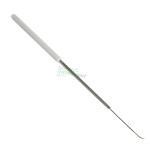
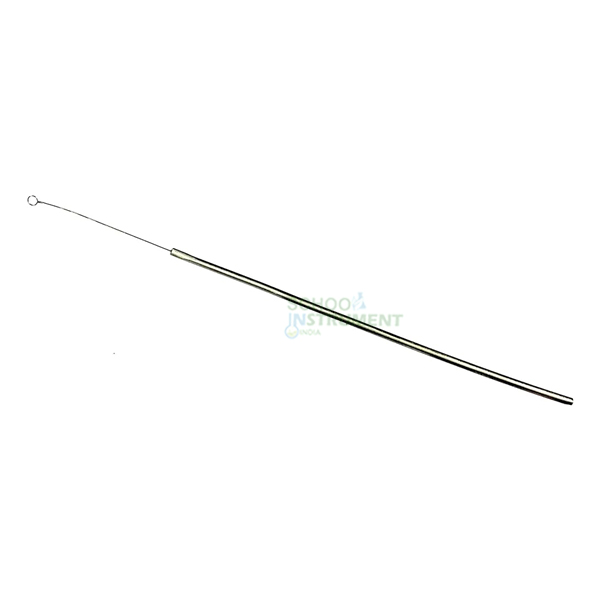
The Inoculating
Loop is a high-duty laboratory instrument engineered for the aseptic transfer
of microbial cultures and streak plating in Secondary and Vocational laboratory
environments. Compliant with ASTM standards for heat-resistant alloys, the
26-gauge nickel-chromium loop ensures rapid sterilization via incineration. It
is optimized for university-prep biology and clinical TVET microbiology
modules.
Technical
Specifications
|
Tender Specification |
OEM Technical Detail |
|
Material Grade |
Aluminum Handle
(Non-insulated); Nickel-Chromium Wire (26 Gauge) |
|
Handle Dimensions |
8" (203mm) Overall
Length |
|
Loop Diameter |
8mm (Non-calibrated) |
|
Thermal Properties |
Rapid cooling/incineration-resistant alloy |
Key Pedagogical
Outcomes
·
26-Gauge Nickel-Chromium Wire. -> Allows for near-instant sterilization in a Bunsen
burner flame, supporting Bloom's "Application" of aseptic technique
in Microbiology Module 101.
·
8" Aluminum Handle. -> Provides significant working distance from the
heat source and culture media, ensuring student safety during the
"Understanding" of inoculation protocols.
·
8mm Loop Diameter. -> Facilitates the collection of standardized
colonial volumes for streak-plating, supporting the "Analysis" of
microbial morphology and growth patterns.
·
Non-Insulated Rigid
Construction. -> Enables rapid
thermal dissipation after flame-sterilization, reducing wait times for specimen
transfer and reinforcing efficient laboratory workflow management.
International
Logistics & Compliance
To satisfy the
requirements of international B2B procurement, all inoculating loops are
dispatched in export-grade seaworthy crating (ISPM-15 compliant). Each shipment
includes a Manufacturer’s Authorization Form (MAF), a Batch Certificate of
Conformance (CoC), and User Manuals in English. The unit features a
tropicalized design; the aluminum and nickel-chromium components are tested for
corrosion resistance and structural integrity in environments up to 45°C and
90% humidity, ensuring zero material degradation in diverse global climatic
zones.