Anatomical Human Nasal Cavity Model Manufacturer,Supplier and Exporter in India
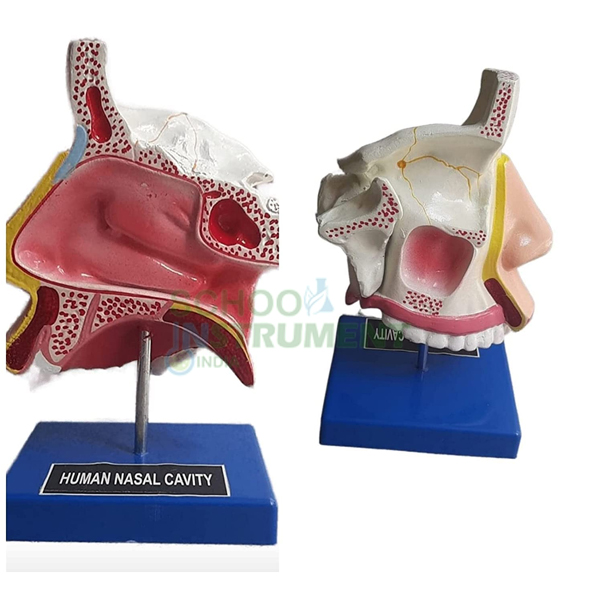
Product Code : SCL-LE-12249
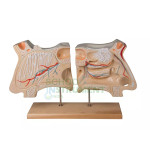
The Anatomical Human
Nasal Cavity Model is a high-fidelity diagnostic surrogate engineered for
University and Vocational medical programs. It facilitates the precise
identification of paranasal sinus topography and lateral nasal wall
architecture. Built to ISO-standard anatomical ratios, it supports advanced
curricula in Otorhinolaryngology and Respiratory Therapy by visualizing the
frontal, sphenoid, and maxillary sinuses.
Technical Specifications
|
Tender Specification |
OEM Technical Detail |
|
Anatomical Scope |
External nose, Nasal Cavity
(Superior/Middle/Inferior Conchae), Paranasal Sinuses |
|
Material Grade |
High-density, medical-grade
PVC (Non-toxic, Phthalate-free) |
|
Mounting |
Rigid polymer baseplate with
reinforced vertical support |
|
Finishing |
Multi-chromatic, chip-resistant
anatomical coding for differentiation |
Key Pedagogical Outcomes
·
Sectioned Nasal Bones
and Cartilages: Enables students to analyze the structural integrity
of the external nose, supporting Module 302: Reconstructive Surgery.
·
Medially projecting
Superior, Middle, and Inferior Nasal Conchae: Allows students to
evaluate the airflow pathways and mucosal surface area, essential for
understanding respiratory filtration mechanics.
·
Open Paranasal Sinuses
(Frontal, Sphenoid, and Maxillary): Facilitates the identification
of drainage pathways and potential sites for sinusitis, supporting Clinical
Diagnostic Training.
·
Integrated Maxillary
Sinus Section: Supports the visualization of dental-sinus proximity,
crucial for Oral Surgery and Maxillofacial curriculum integration.
International Logistics & Compliance
This instrument is
specifically designed for high-frequency handling in international
institutional environments. All units are shipped in export-grade
seaworthy crating (ISPM-15 compliant) to mitigate transit vibration
and humidity damage. Procurement files include the Manufacturer’s Authorization
Form (MAF), IQ/OQ/PQ certification protocols, and comprehensive User
Manuals in English. The tropicalized design
is laboratory-tested for material stability in environments up to 45°C and 90% humidity, preventing mold growth and
structural warping in equatorial climates.