
Laboratory Mat, Rubber Manufacturer,Supplier and Exporter in India
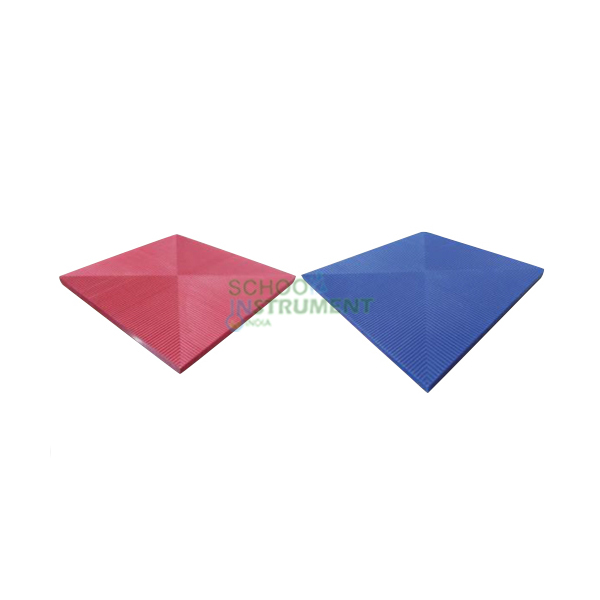
Product Code : SCL-ELE-11908
The Laboratory Mat is
engineered to provide a chemically resilient and high-friction interface for
workstations in University, Vocational, and Secondary science departments.
Available in Natural Rubber or high-thermal Silicon Rubber variants, these mats
exceed ASTM standards for benchtop protection and impact damping. Optimized for
high-enrollment curricula where equipment preservation and technician safety
are paramount.
Technical Specifications
|
Tender Specification |
OEM Technical Detail |
|
Material Grade |
High-Density Natural Rubber
or Medical-Grade Silicon Rubber |
|
Thermal Resistance |
Silicon Variant: Calibrated
for stability from -50°C to +250°C |
|
Surface Profile |
Low-profile, high-traction
finish for instrumentation stability |
|
Chemical Compatibility |
Resistant to diluted acids,
bases, and common laboratory reagents |
Key Pedagogical Outcomes
·
High-Damping
Elastomeric Matrix: Mitigates the
transfer of structural vibrations to sensitive apparatus, ensuring precision
during "Analytical Weighing" and "Microscopy" modules.
·
Silicon
Thermal Barrier: Protects work
surfaces during the handling of heated vessels, facilitating safe student
engagement in "Exothermic Reaction Monitoring" and "Reflux
Distillation."
·
Non-Reactive
Surface Chemistry: Prevents
cross-contamination during reagent preparation, reinforcing institutional
"GLP (Good Laboratory Practice)" and "Aseptic Technique"
protocols.
International Logistics & Compliance
To ensure material
integrity during transcontinental maritime transit, all mats are treated with
UV-inhibitors and secured in moisture-barrier primary packaging within
export-grade seaworthy crating (ISPM-15 compliant). International procurement
documentation includes the Manufacturer’s Authorization Form (MAF), Certificate
of Conformance (CoC), and IQ/OQ/PQ certification for institutional quality
audits. The components are fully tropicalized; the elastomer substrates are
batch-tested for ozone resistance and structural stability in environments
reaching 45°C and 90% humidity to prevent premature hardening or surface
tackiness.

 Charts.jpg)

.jpg)

 Charts-I.jpg)
